
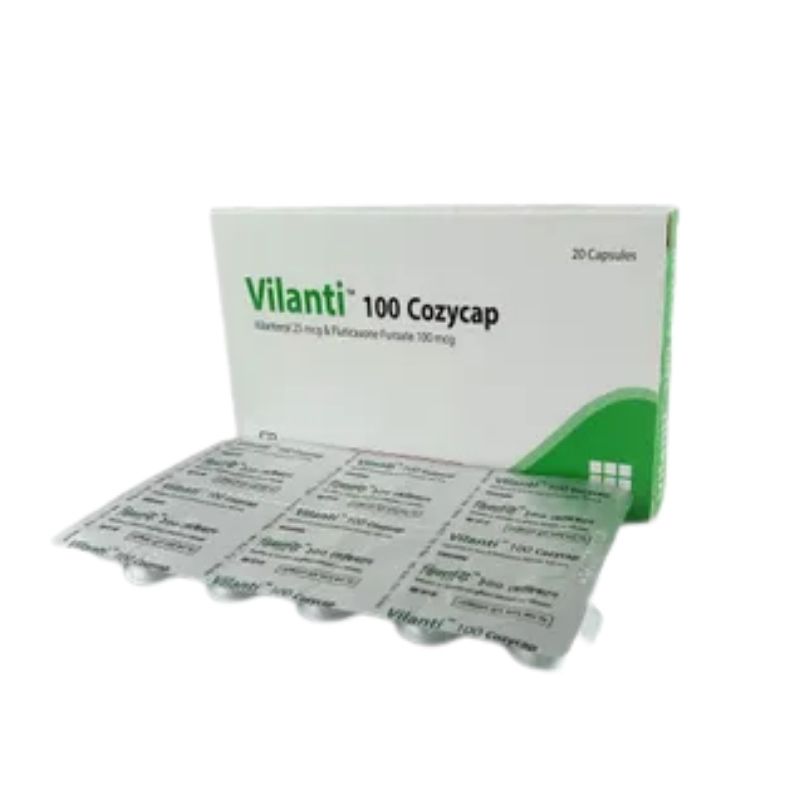
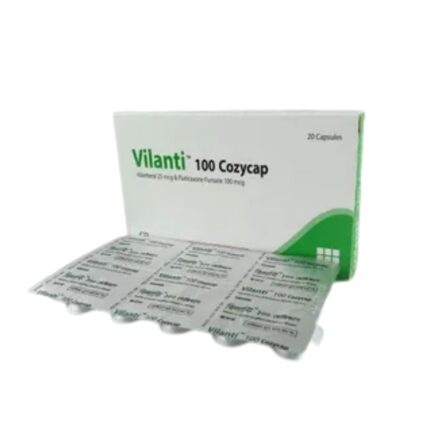
Vilanti 100 Cozycap Capsule – (25mcg+100mcg)
Original price was: 220.00৳ .201.00৳ Current price is: 201.00৳ .
| Weight | 0.015 kg |
|---|
Indications
Vilanti inhalation capsule is indicated in-
- Long-term, once-daily, maintenance treatment of airflow obstruction and reducing exacerbations in patients with chronic obstructive pulmonary disease (COPD).
- Once-daily treatment of asthma in patients aged 18 years and older.
Important limitation of use: Not indicated for relief of acute bronchospasm.
Composition
25/200 inhalation capsule: Each dry powder inhaler capsule contains Vilanterol 25 mcg (as Vilanterol Trifenatate INN) & Fluticasone Furoate INN 200 mcg
Description
Pharmacology
Dosage & Administration
This inhalation capsule must not be swallowed. Only to be used with the device. Remove the capsule from the blister pack only immediately before using it in the inhalation device. After inhalation, rinse your mouth with water without swallowing to reduce the risk of oropharyngeal candidiasis.
Route of administration: Oral inhalation.
Maintenance treatment of COPD: 1 inhalation of 25/100 mcg once daily.
Asthma: 1 inhalation of 25/100 mcg or 25/200 mcg once daily.
Interaction
- Strong cytochrome P450 3A4 inhibitors (e.g., ketoconazole): Use with caution. May cause systemic corticosteroid and cardiovascular effects.
- Monoamine oxidase inhibitors and tricyclic antidepressants: Use with extreme caution. May potentiate effect of vilanterol on vascular system.
- Beta-blockers: Use with caution. May block bronchodilatory effects of beta-agonists and produce severe bronchospasm.
- Diuretics: Use with caution. Electrocardiographic changes and/or hypokalemia associated with non–potassium-sparing diuretics may worsen with concomitant beta-agonists.
Contraindications
- Primary treatment of status asthmaticus or acute episodes of COPD or asthma requiring intensive measures.
- Severe hypersensitivity to milk proteins or any ingredients.
Side Effects
COPD: Most common adverse reactions (incidence ≥3%) are nasopharyngitis, upper respiratory tract infection, headache, oral candidiasis, back pain, pneumonia, bronchitis, sinusitis, cough, oropharyngeal pain, arthralgia, hypertension, influenza, pharyngitis, and pyrexia.
Asthma: Most common adverse reactions (incidence ≥2%) are nasopharyngitis, oral candidiasis, headache, influenza, upper respiratory tract infection, bronchitis, sinusitis, oropharyngeal pain, dysphonia, and cough.
Pregnancy & Lactation
Precautions & Warnings
- LABA monotherapy increases the risk of serious asthma-related events.
- Do not initiate in acutely deteriorating COPD or asthma. Do not use to treat acute symptoms.
- Do not use in combination with an additional medicine containing a LABA because of risk of overdose.
- Candida albicans infection of the mouth and pharynx may occur. Monitor patients periodically. Advise the patient to rinse his/her mouth with water without swallowing after inhalation to help reduce the risk.
- Increased risk of pneumonia in patients with COPD. Monitor patients for signs and symptoms of pneumonia.
- Potential worsening of infections (e.g., existing tuberculosis; fungal, bacterial, viral, or parasitic infections; ocular herpes simplex). Use with caution in patients with these infections. More serious or even fatal course of chickenpox or measles can occur in susceptible patients.
- Risk of impaired adrenal function when transferring from systemic corticosteroids. Taper patients slowly from systemic corticosteroids if transferring to this inhalation capsule. Hypercorticism and adrenal suppression may occur with very high dosages or at the regular dosage in susceptible individuals. If such changes occur, discontinue this inhalation capsule slowly.
- If paradoxical bronchospasm occurs, discontinue this inhalation capsule and institute alternative therapy.
- Use with caution in patients with cardiovascular disorders because of beta-adrenergic stimulation.
- Assess for decrease in bone mineral density initially and periodically thereafter.
- Glaucoma and cataracts may occur with long-term use of ICS. Consider referral to an ophthalmologist in patients who develop ocular symptoms or use this inhalation capsule long term.
- Use with caution in patients with convulsive disorders, thyrotoxicosis, diabetes mellitus, and ketoacidosis.
- Increased blood glucose levels have been reported. Also, be alert to hypokalemia.
Use in Special Populations
Use in Children & Adolescents: This is not indicated for use in children and adolescents. The safety and efficacy in pediatric patients (aged 17 years and younger) have not been established.
Hepatic impairment: Fluticasone furoate systemic exposure may increase in patients with moderate or severe impairment. Monitor for systemic corticosteroid effects.
Overdose Effects
Therapeutic Class
Storage Conditions
Only logged in customers who have purchased this product may leave a review.



Reviews
There are no reviews yet.